
Heating Replacement and Installation in Lexington & Louisville
Picture this: a snowy day, the temperature plummeting, and no indoor heating. Rather than pulling out the blankets, contact Dauenhauer for local heating installation and replacement services. Our team installs and replaces at-home heating systems so you can keep cold temperatures at bay.
If you’ve just opened the weather app to a cold front, we’ve got your back. Call for more information about what we can do for your Louisville or Lexington home.
24/7 Heating Replacement Services in North Central, KY
From November to March, Kentucky residents expect snowfall. Freezing temperatures slowly start to make routines such as washing dishes and showering take longer, posing a natural need for indoor heating.
If your heater begins to deteriorate, whether from age or impact, it must receive professional attention.
Many working parts allow your home heating system to do what it does. Dauenhauer provides comprehensive heating replacement services throughout Kentucky, such as Louisville, Lexington, Elizabethtown, and other areas.
If it gets to the point where you need an entirely new system, call us to install one of these heating outlets:
- Electric Furnaces
- Natural Gas Furnaces
- Air Heat Pumps
- Geothermal Heat Pumps
- Ductless Mini-Splits
- Boilers
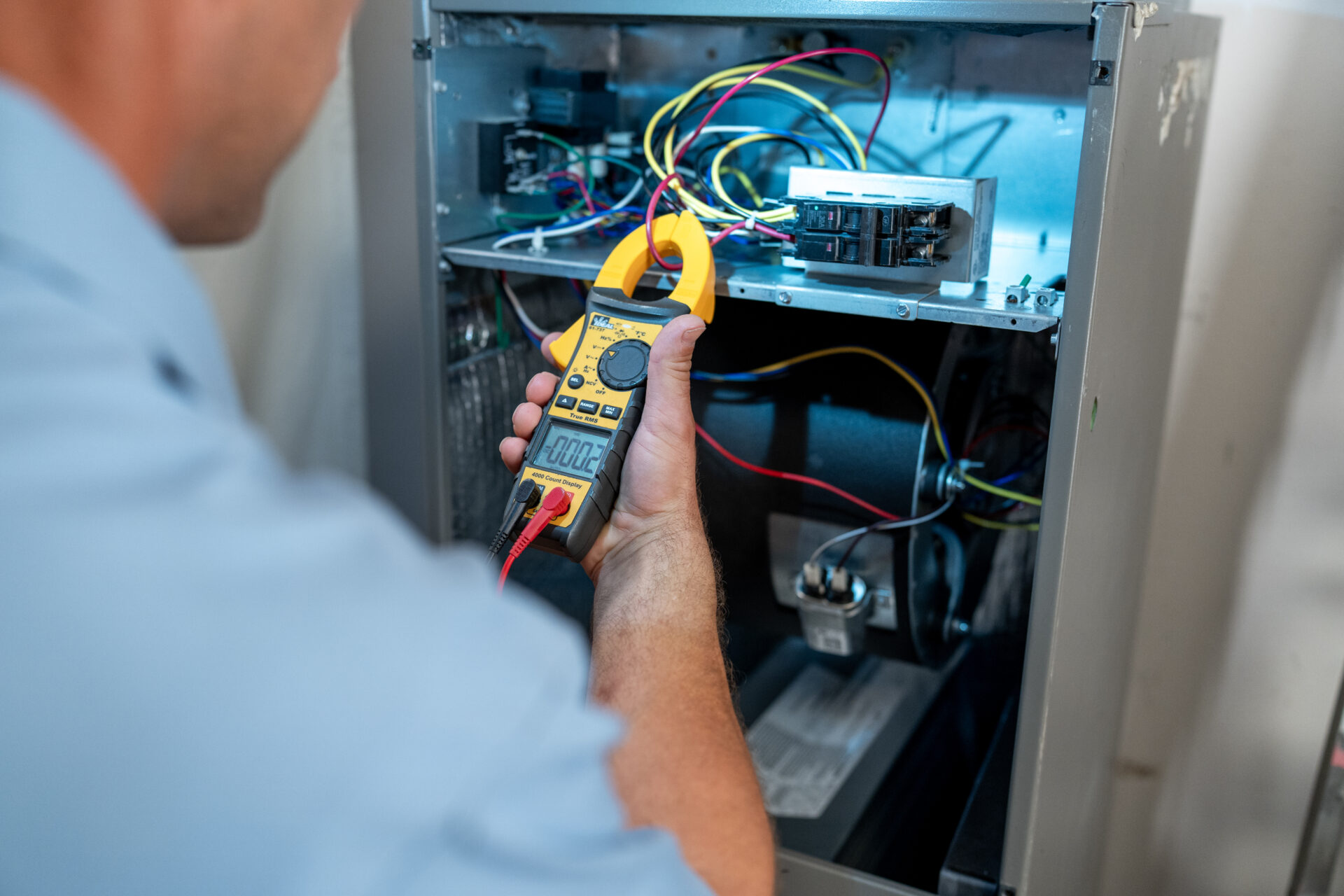
When Should I Replace My Heating System?
Furnace, boiler, or mini-split, all heating systems run down over time. Even with routine maintenance, there will come a time when you need a completely new system.
Consider the age, physical damage, and efficiency of your heating system when considering a replacement. If you know the model or type you have, it might be smart to replace it before it becomes an inconvenience.
Older heaters often range in the 56 to 70 percent efficiency range. In contrast, modern heaters can achieve heat efficiencies as high as 98.5 percent. You could be losing money that could be saved and put toward a new heating system.
For more information about the lifespan of your home heating system, call to speak to a specialist. Noticing any of these telltale signs signals the need for a full replacement:
- Furnace is 15 to 20 Years Old
- Heat Pump is 15 to 20 Years Old
- Loud or Unusual Noises
- Increased Utility Bill
- Inconsistent Heat Production/Flow
- Inefficient Heat Production/Flow
Choosing The Right Heating System in Louisville, Lexington, and Surrounding Areas
So, it’s time for a new heating system. Although you have many options, make sure to choose the one that fits your needs. Think about preferences like heating time, accessibility, and cost.
Older heating systems will continue to increase your heating bill since an aged boiler or furnace cannot produce a consistent heat flow.
There’s a way to have everything you need in a single installation service, and it starts with contacting us.
Louisville, Lexington, and surrounding areas can choose from a variety of options, such as gas and electric furnaces or boilers. Each system has its unique benefits:
1. Gas & Electric Furnaces
Over 66% of Kentucky homeowners use a furnace for their primary heating system.
Gas furnaces are preferred by people who want to heat their homes quickly. While gas furnaces can create a lot of heat fast, it’s important to monitor for carbon monoxide. Many homeowners opt for electric furnaces because of their efficiency, lack of mixed gases, and eco-friendly components.
Electric furnaces also do not require as much maintenance as gas furnaces. Consider the cost difference in long-term maintenance when choosing which one is right for you. Dauenhauer can help assist you in picking the right furnace replacement for your home.
2. Heat Pump Systems
Heat pumps are one of the most cost-effective and eco-friendly options. They are dual-operating, meaning they can heat and cool a space using air from the ground. Since heat pumps can both heat and cool a home, there’s no need for a separate cooling system.
Safe, flexible, and great for the environment, heat pump systems remain a popular heating mechanism for many Kentucky homeowners. Heat pumps are the second most prevalent heating system in Kentucky, with 22 percent of homeowners using it as their primary heat source.
3. Ductless Mini-Split Systems
Ducts aren’t the most consistent when it comes to air circulation. Ductless mini-split systems don’t use ductwork to funnel air, but rather minimal air filtration systems that go on the wall. They’re efficient, quiet, and affordable.
Think of a ductless mini split system as an upgraded, modern version of the traditional duct system.
4. Boiler Systems
Boiler systems were popular in the 1900s—and they are still popular today. However, instead of air, boilers produce steam that is heated and radiated throughout a space. You also don’t need to worry about debris accumulating in a boiler, which can slowly decrease efficiency.
While boiler systems can have a higher initial cost than most, they achieve cost-efficient results.

What to Expect With a Heater Replacement
Not all heater replacement services are made equal. Dauenhauer’s heater replacement process provides homeowners with the transparency and reassurance they need to make the switch.
Using your unique preferences, our team will start with a heat load calculation service. This allows us to project what level of heating your home needs. If additional upgrades are needed, we’ll find out by performing a professional ductwork and air handler inspection.
Next, we switch the old out with the new. All pre-existing heating components are removed and replaced with your new, customized heating system. Expect at least three days for us to complete the process.
Can’t wait? Contact Dauenhauer for an immediate heater replacement at your home today.
Benefits of Installing a New Heating System
The initial cost may be daunting, but the investment is worth it. The extra money, time, and energy you are putting into excessive maintenance could likely pay for a brand-new system. Below are several benefits that come with the installation of a new heating system.
Upgraded Energy Efficiency and Lower Bills
New systems operate faster. Take solace in the improved, low-cost heat production of a newer heating system. If you’re paying large energy bills every month, you should begin seeing a decrease after installing a new heater.
Improved Indoor Air Quality
Gone are the days of uneven heat distribution. Options like ductless mini-splits can keep airflow consistent without risking dust and debris buildup. Newer furnaces are made to retain heat, so you don’t lose warmth when you need it.
Extended Lifespan and Less Frequent Repairs
It’s estimated that most heating systems last between 15 and 20 years. Kentucky residents need to consider climate demands, as winters can be harsh.
Modern systems are built to last and do not require frequent maintenance. Weather the cold with a new heating system for years to come.
Smart Heating Features
With a newer system comes better abilities. Adjust the temperature, zone, or run time of your system from any room.
It’s all about user control with smart systems. All have an accessible thermostat (either on your phone or on the wall) that you can access at any time. This grants a level of convenience you might not have had with your old system.

See What Your Neighbors Are Saying
Reliable Heating Replacement Services in Louisville, Lexington, Shelbyville, and Other Areas
At any hour, trust Dauenhauer to install or replace your home heating system to your liking. If you have constraints that may hinder your ability to purchase a new system that you desperately need, we’re happy to work with you. Whether you need a simple inspection, maintenance, heating repair, or a full-service replacement, don’t hesitate to call.
Heating Replacement & Installation FAQs
Is it worth replacing a 30-year-old furnace?
Almost always, yes. ASHRAE puts the median life expectancy of a gas or oil furnace at about 18 years; by 30, most systems are running at 60–70% AFUE compared to modern 90–98% AFUE equipment, and replacement parts for that era are often discontinued. Upgrading to a high-efficiency condensing furnace (ENERGY STAR) typically cuts heating fuel use by 20–40%, which for an average home pays back a meaningful portion of the install cost over 8–12 years — separate from the lower breakdown and carbon-monoxide risk of a new, properly vented unit.
How long does a new heating system take to install?
A straight like-for-like furnace replacement in Louisville is typically a 1-day job (6–10 hours). A full furnace + A/C or heat pump changeout is usually 1–2 days. A boiler swap, including re-piping the near-boiler plumbing, takes 2–3 days. Projects that also include ductwork modifications, new line sets, electrical service upgrades, or first-time heat pump installs on homes without existing ducts can take 3–5 days. Before we quote, we walk the site and confirm permit needs with your local Louisville building department.
How do I know what size heating system I need?
By running an ACCA Manual J load calculation — the ANSI-recognized standard for residential HVAC sizing and a code requirement in most jurisdictions. Manual J accounts for your home’s square footage, insulation, window area and orientation, air infiltration, duct losses and local design temperature. Sizing by “rule-of-thumb” (often one ton per 400–600 sq ft) routinely oversizes equipment by 30–50%, which causes short-cycling, poor humidity control, uneven temperatures and shorter equipment life. If a contractor quotes a size without measuring your home, get a second opinion.
Do I have to replace the ductwork when I replace the heating system?
Not usually, but we inspect and test it on every install. The DOE estimates the average home loses 20–30% of conditioned air through duct leaks — installing a new high-efficiency furnace on leaky, undersized ducts throws away much of the efficiency you just paid for. We’ll check duct sizing against the Manual J load, seal accessible joints with mastic, and recommend duct modifications only where the numbers justify them.


